


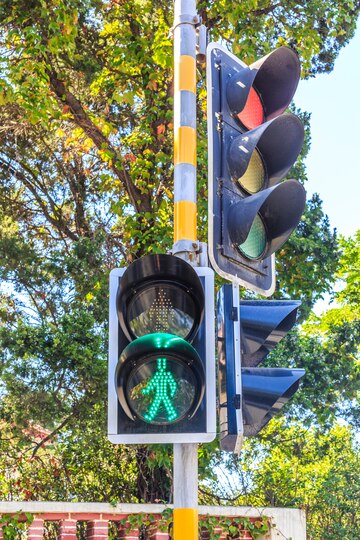
Modern roads would not be the same without traffic lights, which subtly direct the movement of cars and pedestrians. Even though we might take these bright lights for granted, they are the product of intricate planning and engineering intended to guarantee road safety and effectiveness. Traffic lights are essential to the effective operation of cities and towns because they reduce accidents and manage traffic.
A Brief History of Traffic Lights
The first traffic signal appeared in London in 1868, operated manually by a police officer using gas lamps. It wasn’t until 1914 that the first electric traffic light system was installed in Cleveland, Ohio. Since then, traffic lights have evolved significantly, incorporating advanced technologies to adapt to modern traffic demands.
The Purpose of Traffic Lights
Managing Traffic Flow
Traffic lights control the movement of vehicles and pedestrians at intersections, ensuring that traffic flows in an orderly manner. This reduces the likelihood of collisions and helps prevent bottlenecks.
Enhancing Safety
By assigning right-of-way, traffic lights minimize conflicts between vehicles and pedestrians, reducing accidents at busy intersections.
Balancing Efficiency
Coordinated traffic light systems improve traffic flow by reducing stop-and-go driving , which also decreases fuel consumption and emissions.
Providing Access for Pedestrians and Cyclists
Traffic lights with pedestrian crossings and cyclist signals ensure that all road users can navigate safely.
How Traffic Lights Work
Fixed-Time Systems
In fixed-time systems, lights change according to a pre-set schedule. These are common in low-traffic areas or smaller cities where traffic patterns are predictable.
Actuated Systems
These systems use sensors to detect vehicles and pedestrians, adjusting light cycles based on real-time traffic conditions. Inductive loops in the pavement, cameras, or infrared sensors are commonly used.
Adaptive Systems
The most advanced systems, adaptive traffic lights use artificial intelligence to analyze traffic flow and adjust signals dynamically. These are typically found in larger cities to manage complex and fluctuating traffic patterns.
Key Components of a Traffic Light System
Signals and Controllers
The red, yellow, and green lights are controlled by a central system that determines the timing and sequence.
Sensors
Sensors detect vehicles waiting at an intersection, ensuring that the signal changes when needed.
Timers
Timers set the duration of each light, balancing efficiency and safety based on traffic data.
Pedestrian Buttons
These allow pedestrians to request a crossing, ensuring they have adequate time to cross safely.
Emergency Vehicle Preemption
Some systems are equipped to give priority to emergency vehicles, temporarily overriding normal operations to allow rapid passage.
Common Traffic Light Issues and Solutions
Traffic Jams at Peak Hours
Adaptive traffic light systems and synchronized timing plans can alleviate congestion during rush hours.
Malfunctions
Power outages or technical faults can disrupt traffic. Backup power systems and regular maintenance help minimize downtime.
Ignored Signals
Red-light violations are a safety concern. Cameras and fines are common deterrents.
Pedestrian Safety
In busy intersections, pedestrian signals with countdown timers improve safety by clearly indicating crossing times.
Innovations in Traffic Light Technology
Smart Traffic Lights
Equipped with AI, these systems analyze traffic patterns and adjust signals in real time to improve flow and reduce emissions.
Connected Vehicle Technology
Future traffic lights may communicate directly with vehicles, advising drivers when lights will change to reduce sudden stops and improve fuel efficiency.
Solar-Powered Traffic Lights
These are an eco-friendly solution, especially in remote or developing areas with limited access to electricity.
Pedestrian and Cyclist Priority Systems
Some cities are introducing systems that detect vulnerable road users and adjust signals to give them priority.
Why Traffic Lights Are Indispensable
Traffic lights create order out of potential chaos. Without them, intersections would become dangerous free-for-alls, especially in busy urban areas. By coordinating the movements of vehicles, cyclists, and pedestrians, traffic lights ensure everyone reaches their destination safely and efficiently.
Traffic lights are a monument to human creativity, from their modest origins to their incorporation with state-of-the-art technology. One green light at a time, they keep the world turning, playing a silent but essential role in our everyday lives.


