


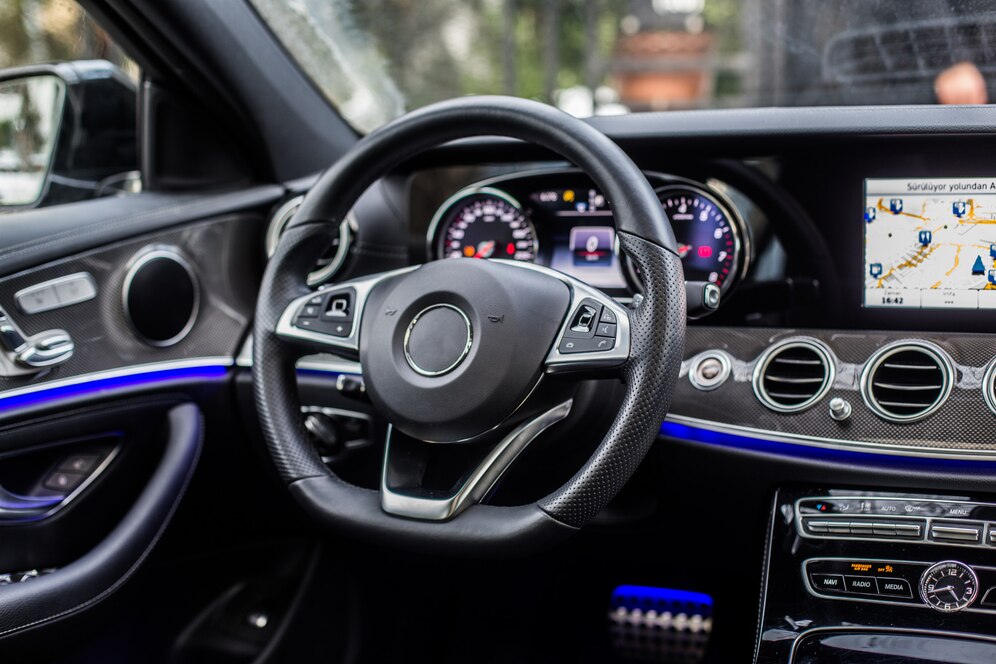
Welcome to No Yelling Driving School, where we're committed to providing high-quality education to drivers of all levels. Whether you're a beginner just starting your driving journey or someone looking to refresh your skills, understanding the controls and dashboard indicators inside the car is essential for safe and confident driving. In this blog post, we'll take you through a beginner's guide to navigating the various controls and dashboard indicators you'll encounter behind the wheel with the expertise of our experienced instructors.
Steering Wheel: The steering wheel is your primary tool for controlling the direction of the vehicle. Hold it firmly with both hands in the 9 and 3 o'clock positions to maintain proper control and responsiveness. Practice turning the wheel smoothly and gradually to steer the car accurately.
Pedals: Most cars have three pedals: the accelerator (gas), brake, and clutch (in manual transmission vehicles). The accelerator increases speed, while the brake slows or stops the car. In manual cars, the clutch is used to change gears. Familiarize yourself with the pedals' placement and function before driving.
Gear Shift: In manual transmission vehicles, the gear shift is used to change gears manually. Start by locating the gear shift lever and familiarizing yourself with the gear positions (P, R, N, D, etc.). Practice shifting gears smoothly and efficiently under the guidance of our experienced instructors.
Dashboard Indicators: The dashboard contains various indicators and warning lights that provide important information about the car's status. Common indicators include the speedometer, fuel gauge, temperature gauge, and odometer. Pay attention to warning lights for issues like low fuel, engine problems, or tire pressure.
Turn Signals: Turn signals are essential for communicating your intentions to other drivers. Located on the steering column, turn signals indicate when you're planning to turn left or right. Remember to activate them well in advance of making a turn or changing lanes.
Headlights and Wipers: Familiarize yourself with the controls for headlights and windshield wipers. Headlights help you see and be seen in low-light conditions, while wipers keep the windshield clear of rain, snow, or debris. Practice using these controls in various weather conditions.
Climate Control: Depending on the car, climate control settings may include air conditioning, heating, defrosting, and fan speed. Learn how to adjust these settings to maintain a comfortable driving environment while staying focused on the road.
Emergency Equipment: Know the location and function of emergency equipment such as hazard lights, horn, and emergency brake. These features can help you respond quickly to unexpected situations and communicate with other drivers on the road.
By familiarizing yourself with these controls and dashboard indicators, you'll feel more confident and in control while driving. At No Yelling Driving School, our experienced instructors are here to guide you through each step of the learning process, ensuring you develop the skills and knowledge needed to become a safe and responsible driver. So, buckle up and get ready to embark on your driving journey with confidence!


