


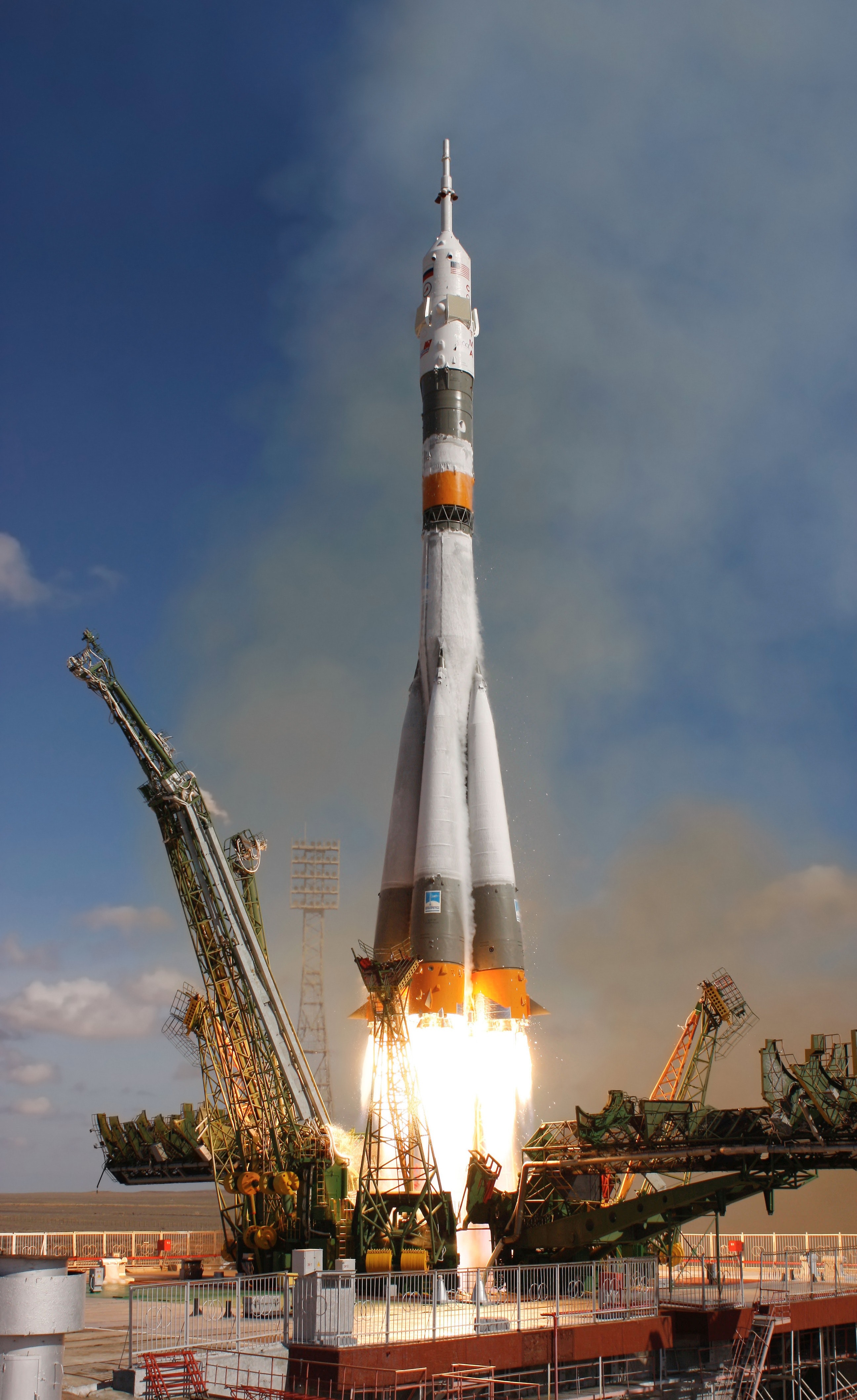
The vast expanse of space has always captured our imagination, and humans have embarked on incredible journeys beyond Earth's atmosphere. But how do rockets, those mighty vessels of exploration, manage to break free from Earth's gravitational pull and accelerate into space? In this blog post, we will delve into the science behind acceleration and rocket propulsion, exploring the principles that enable rockets to go faster and reach the stars. Additionally, we'll touch upon the relevance of this topic to "driving school in Brisbane."
Rocket Propulsion: The Basics
Before we discuss acceleration, it's crucial to understand the fundamentals of rocket propulsion. At its core, rocket propulsion is governed by Newton's third law of motion: "For every action, there is an equal and opposite reaction." Rockets work on the principle of expelling mass at high speeds in one direction to generate thrust in the opposite direction.
Components of a Rocket Engine
- Propellant: Rockets carry both fuel and an oxidizer onboard, which are mixed and combusted in the rocket engine.
- Combustion Chamber: This is where the fuel and oxidizer mix and burn, creating hot, high-pressure gases.
- Nozzle: The nozzle directs the flow of gases, increasing their speed and converting thermal energy into kinetic energy.
- Thrust Chamber: The thrust chamber is where the high-speed exhaust gases exit the rocket, providing thrust.
Role of Acceleration in Space Travel
Acceleration plays a pivotal role in space travel. It's not just about reaching high speeds; it's about escaping Earth's gravity, entering orbit, and eventually traveling to other celestial bodies. Here's how it works:
1. Escaping Earth's Gravity
Earth's gravity exerts a force that pulls everything towards its center. To break free from this gravitational pull, a rocket must generate enough thrust to accelerate past a critical velocity called escape velocity. This velocity varies with an object's distance from Earth but is approximately 11.2 kilometers per second (about 25,000 miles per hour) at the Earth's surface.
2. Achieving Orbit
Once a rocket reaches escape velocity, it doesn't immediately escape Earth's gravity but enters orbit. Orbit is essentially a state of free fall, where the rocket is moving forward at such a speed that it continuously falls around the Earth. To achieve orbit, a rocket must attain sufficient horizontal speed while constantly accelerating.
3. Space Travel
After escaping Earth's gravity and achieving orbit, rockets continue to accelerate to travel further into space. They use onboard propulsion systems to perform trajectory adjustments, orbital transfers, and rendezvous with other celestial objects.
Propulsion Techniques and Applications
Rocket propulsion techniques have evolved over time to make space travel more efficient and cost-effective. Here are some propulsion methods and their applications:
1. Chemical Rockets
Chemical rockets are the most common type of propulsion system. They use chemical reactions, typically involving liquid or solid propellants, to generate thrust. These rockets are used for launching payloads into space, sending spacecraft on interplanetary missions, and conducting crewed missions to the International Space Station (ISS).
2. Ion Propulsion
Ion propulsion systems use electric fields to accelerate charged particles (ions) to produce thrust. Although they generate less thrust than chemical rockets, ion engines are highly efficient and ideal for long-duration missions, such as deep space exploration and satellite station-keeping.
3. Nuclear Thermal Propulsion (NTP)
Nuclear thermal propulsion uses a nuclear reactor to heat a propellant like hydrogen, producing high-speed exhaust. NTP systems are still in the experimental stage but hold promise for faster interplanetary travel.
4. Solar Sails
Solar sails utilize the pressure of photons from the Sun to generate thrust. They are efficient for deep space missions and require no onboard fuel. Projects like the Breakthrough Starshot aim to use solar sails for interstellar travel.
Influence on Driving School in Brisbane
You might wonder how the science of rocket acceleration relates to "driving school in Brisbane." While the two subjects may seem worlds apart, they share a common thread - the principles of acceleration.
Driving schools in Brisbane, like anywhere else, teach aspiring drivers the importance of acceleration and deceleration. While the context is different, the underlying principles remain the same. Here's how:
- Acceleration and Control: Just as rockets require precise control during acceleration, drivers must control their vehicles when accelerating from a stop or changing lanes. Driving schools emphasize the importance of smooth and controlled acceleration to ensure safety on the road.
- Safety: Rockets need to accelerate safely to avoid catastrophic failures. Similarly, safe acceleration and deceleration are paramount in driving to prevent accidents and ensure the safety of passengers and pedestrians.
- Performance: Rockets aim to optimize their performance in the vacuum of space. Similarly, drivers can optimize their vehicle's performance by understanding acceleration techniques, ensuring fuel efficiency, and prolonging the life of their vehicles.
- Physics and Mechanics: Both rocket acceleration and driving acceleration involve principles of physics and mechanics. Driving schools teach drivers about these principles, even if they apply them to terrestrial vehicles.
FAQ Section
Q1: How do rockets steer in space?
A1: Rockets steer in space by using small thrusters or gimbal-mounted engines. These adjustments are essential for navigation and trajectory control.
Q2: Are there any plans for faster space travel in the future?
A2: Yes, researchers are exploring advanced propulsion methods like nuclear thermal propulsion and solar sails to achieve faster interplanetary travel.
Q3: Can I become an astronaut by learning about rocket science?
A3: Learning about rocket science is a valuable step, but becoming an astronaut also requires physical fitness, technical skills, and meeting specific qualifications set by space agencies.
Q4: How can I apply the principles of acceleration to safe driving?
A4: Apply gradual and controlled acceleration when starting from a stop, avoid rapid acceleration and abrupt deceleration, and maintain a safe following distance from other vehicles.
Conclusion
Rocket acceleration is the foundation of space travel, enabling us to explore the cosmos. While it might seem unrelated to the world of driving, the principles of acceleration, control, safety, and performance bridge the gap between rocket science and driving on the streets of Brisbane. By understanding and practicing these principles, whether in the vastness of space or on the roads of Brisbane, we can ensure safe and efficient journeys towards new horizons.


